

Asian Seafood Isn't Filthy
Challenging Environmental Racism and Redefining Seafood Conservation
My name is Tu David Phu, a 37-year-old 1st-gen Vietnamese-American chef who has always been captivated by people's stories. Through the art of cooking, I have become a storyteller, using food as my medium. One of the most profound stories I fell in love with was that of my refugee mother. Her tale, deeply rooted in Vietnamese heritage, unfolded in the kitchen, revealing a life I never knew. This remarkable journey inspired me to turn her narrative and culinary wisdom into a film, earning us an Emmy nomination in 2022. This recognition echoed her marginalized voice, promoting the values of frugality and zero-waste cooking that epitomize sustainability. However, my experiences also exposed the historical and systematic barriers faced by people of color, which deeply affected my upbringing and perception of the world.
Recognizing the Problem
People of color have historically been treated as an existential danger to the Western world. Or at the very least, they are considered filthy. Identities like my mother have always combated the myth of western excellence. Or is it the myth that people of color and excellence can't coincide? In either case, this type of flawed thinking would create systematic barriers, marginalizing communities and identities, especially women. I can't help but feel the heavy sense of erasure bestowed on people like my mother. The conjunction of the two myths is simply dehumanizing.

I was raised in West Oakland, the part of town where they paved over our parks and natural spaces to build freight, freeways, industry, and port operations; exposing us to the worst kinds of pollution. Grouped with other people of color, predominantly black and brown identities, where access to basic infrastructures for nutritious food (such as grocery stores) wasn't prioritized. Instead, our neighborhoods were filled with liquor stores. The USDA calls it a "food desert." I call it a "food apartheid subjected by redlining." What is redlining? The term has come to mean racial discrimination of any kind in housing, but it comes from government maps that outlined areas where Black and Brown residents lived and were therefore deemed risky investments. The impact of redlining, a discriminatory practice that segregated marginalized communities into urban housing projects and deprived them of access to natural spaces, cannot be ignored.
The way these things transpired in me for a long time created a strong sense of self-shame. It made me feel that our food was filthy, food access was a privilege (not a right), and people of color do not belong in nature.

Recognizing My Mother's Wisdom
It wasn't until I found myself working with communities and organizations (such as Stanford Medicine, Obama Foundation, Postelsia, and Asian Seafood Improvement Collaborative) that existed in the intersection of food, culture, and science-backed data that I started to recognize my mother's habits, teachings, and lessons in the kitchen were synonymous with my favorite farmers, chefs, and environmentalists experts, all of which were NOT people of color. They were using hot topic terms like "regenerative agriculture, zero-waste, circular economy, etc." - Everything my mother has done. But I couldn't help wondering why there aren't more people like my mother in the food sustainability space. People of color rooted in wisdom; taught through oral traditions; collected from indigenous communities that happen to be generational inhabitants in natural ecosystems.

Historical Foundations of Environmental Racism
According to George Frederickson, a white Stanford professor and an influential voice on race and racism,
"The Nineteenth century was an age of emancipation, nationalism, and imperialism--all of which contributed to the growth and intensification of ideological racism in Europe and the United States."

The United States environmentalism history is tainted with racism, dating back to the 19th century. Teddy Roosevelt, a prominent figure in environmental stewardship, had racist ideologies, as did Madison Grant, who authored a book promoting white supremacy. Both Teddy Roosevelt and Adolf Hitler are on record for openly praising the book with admiration. Their ideologies influenced conservation efforts, segregating marginalized communities and concentrating natural spaces within predominantly white neighborhoods, perpetuating environmental racism.

Similarly, John Muir's contributions to environmentalism must be critically examined, as his writings contained racist views towards Native Americans and Black people.
Challenging White Savior Complex in Conservation
Environmentalism's Systematic Racism isn't limited to just unequal access to nature. But its racist teachings render deep into the academics and study of wildlife, which is then reproduced in conservation activities outside academia. As a result, opinions and studies impart (sometimes unintentional) racist and prejudiced undertones in conservation efforts domestically and abroad.
These efforts are often described as the "white savior complex." Although unintentional, preservation efforts may be well-intentioned to protect wildlife areas, but it puts a blind eye to the human rights violations (and abuses) imposed on indigenous communities dependent on them. One example is the Fortress Conservation Model, which protects national parks or wildlife reserves from human contact. This line of thinking needs to be revised and originates from colonialism, where colonial state authorities saw the need to police "savage" wildlife-encroaching peoples. Or, as Madison Grant would suggest, non-Nordic identities "cannot be aristocratic naturally. Nor do they have the ability to have aristocratic encounters with nature."
A Transformative Journey
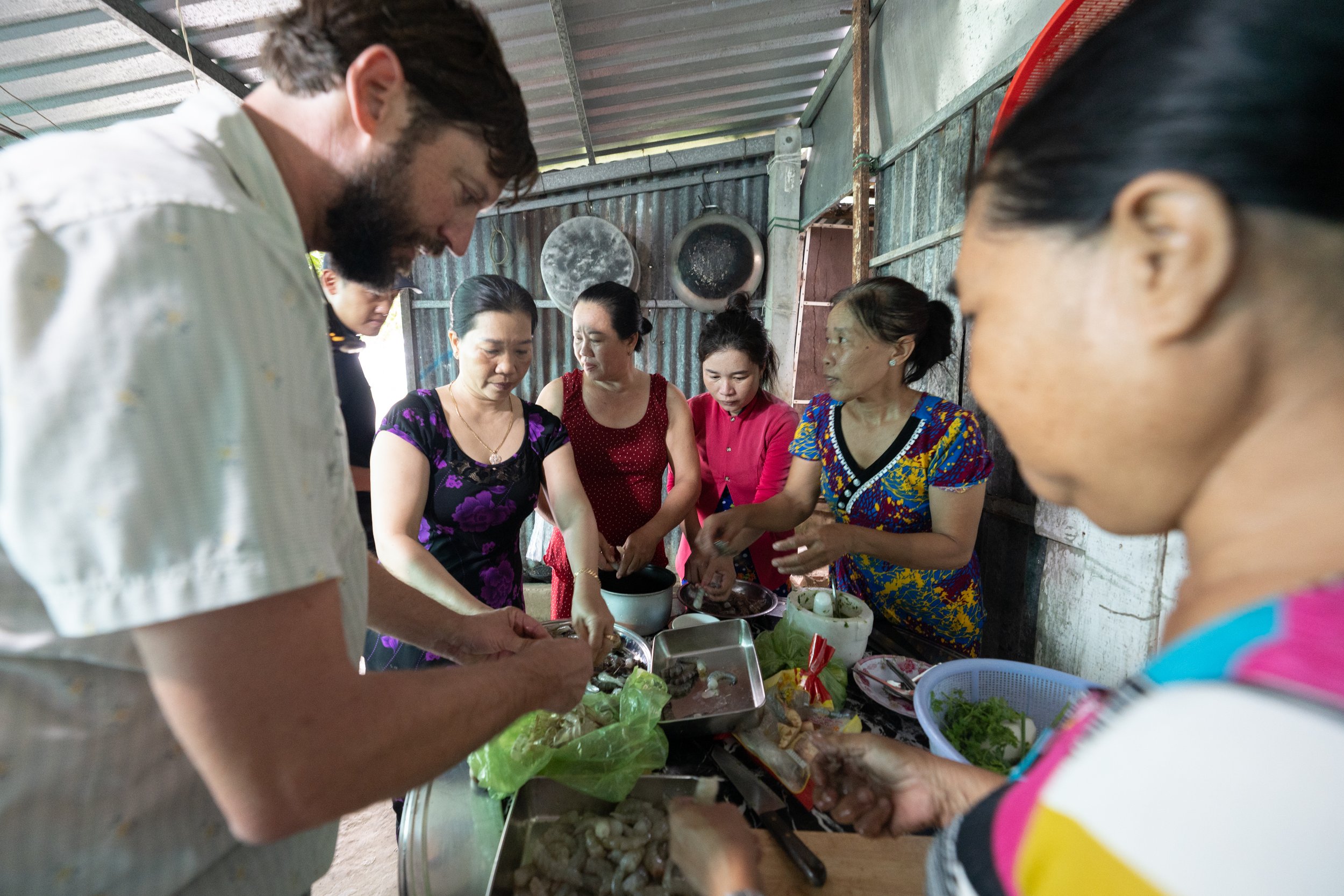
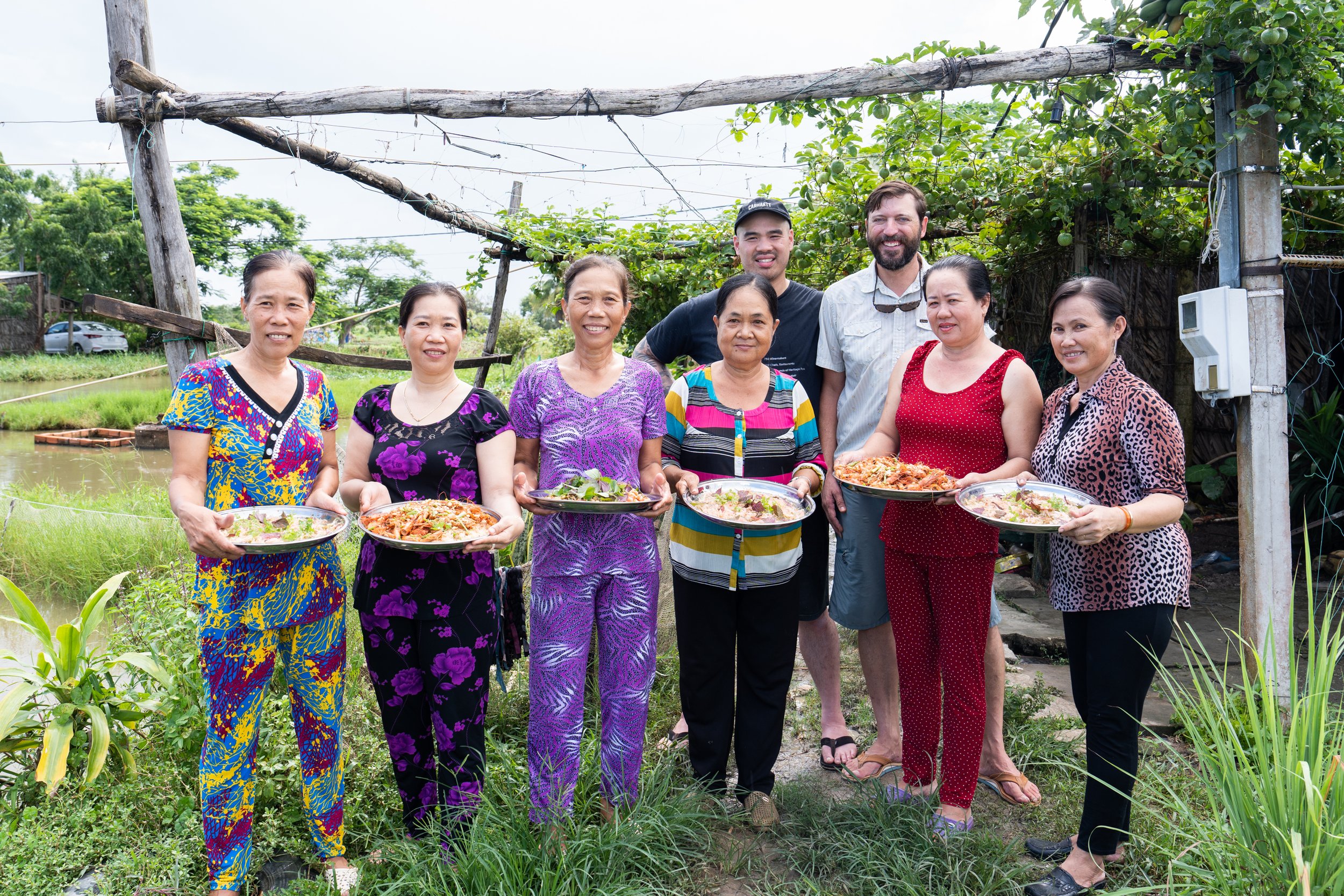
Recently, my perspective took a transformative turn during a trip to Vietnam with members of the Asian Seafood Improvement Collaborative. There, I had the opportunity to connect with black tiger shrimp producers and witness the regenerative practices in a symbiotic ecosystem. These Vietnamese shrimp farmers demonstrated an aristocratic encounter with nature, countering racist notions that associate Asian ocean stewardship with filth and uncivilized practices. This experience opened my eyes to the biases ingrained in environmentalism and conservation.

Understanding Mangrove Shrimp: Regenerative Aquaculture in Vietnam
To understand why mangrove shrimp farming matters, we first have to confront what has been lost. Since the mid-20th century, Vietnam has lost more than half of its mangrove forests. Across Southeast Asia, mangrove deforestation accelerated not because of indigenous food systems, but because of war, state-led coastal development, and export-driven industrial aquaculture backed by foreign capital. Monoculture shrimp farms cleared mangroves at scale, severing the relationship between food production and ecological stewardship and leaving coastal communities more exposed to climate instability.
Mangroves are not marginal ecosystems. They are among the most powerful climate buffers on Earth. Per hectare, mangrove forests sequester up to four to five times more carbon than tropical rainforests, including the Amazon, storing much of that carbon deep in waterlogged soils where it can remain locked away for centuries. When mangroves are destroyed, that carbon is released back into the atmosphere, accelerating climate change rather than mitigating it. At the same time, mangroves function as living infrastructure. Their dense root systems stabilize coastlines, prevent erosion, and dramatically reduce the force of storm surge, typhoons, and coastal flooding. Studies show that intact mangrove belts can reduce wave energy by as much as 60–80%, making them a first line of defense for coastal villages facing rising seas and intensifying storms.
What I witnessed in Vietnam directly contradicted the dominant Western narrative that frames Asian aquaculture as inherently extractive or careless. Mangrove shrimp farming—particularly in the Mekong Delta—is not industrial monoculture. It is a regenerative, low-input system rooted in coexistence with coastal ecosystems that Vietnamese communities have stewarded for generations. Shrimp are raised in tidal ponds woven into living mangrove forests, following natural estuarine rhythms rather than mechanical force. These systems rely on tidal exchange instead of aeration, and shrimp feed on naturally occurring plankton, algae, and detritus produced by the mangroves themselves. No synthetic feed is required. No antibiotics are necessary. The forest regulates water quality, absorbs waste, and buffers disease.
Critically, mangrove shrimp systems are designed to prevent deforestation rather than contribute to it. Farmers are required to maintain substantial mangrove coverage—often 50 to 70 percent forest per farm—making shrimp production inseparable from forest preservation. Yield is intentionally modest. Shrimp grow slowly. This restraint is often misread by Western metrics as inefficiency, when in fact it reflects ecological literacy. The health of the shrimp depends entirely on the health of the mangroves. There is no shortcut.
This logic mirrors what I have learned through working with community-based Vietnamese producers like those behind Son Fish Sauce: sustainability is not about scale or optimization, but continuity. Smallholder producers operate within limits because exceeding them collapses the system. Mangrove shrimp farmers understand that if the forest dies, so does their livelihood. Their economic survival is inseparable from ecological health.
These systems also strengthen communities in ways industrial aquaculture cannot. Mangrove shrimp farming requires few external inputs, freeing farmers from cycles of debt tied to feed companies, antibiotics, and chemical suppliers. It preserves multi-species ecosystems—fish, crabs, mollusks—that support food security beyond a single export crop. It stabilizes coastlines, protects homes, and keeps land in local hands rather than consolidating it under corporate ownership. In short, it sustains both people and place.
Yet Western conservation narratives routinely fail to distinguish between these regenerative systems and the industrial models that caused the damage in the first place. Entire regions are red-listed. Entire cultures are flattened. Communities practicing regeneration are punished, while the global economic structures that incentivized mangrove destruction remain intact. The irony is that practices embodying zero-waste principles, circular economies, and regenerative design are only legitimized once translated into Western frameworks like “blue carbon” or “nature-based solutions”—often without crediting the people who have lived this knowledge for centuries.
Mangrove shrimp farming challenges the colonial assumption that conservation requires removing people from nature. It proves that human presence—when guided by generational knowledge, restraint, and accountability—can strengthen ecosystems rather than degrade them. This is not theoretical. Vietnam’s mangrove restoration efforts, many led by local cooperatives, have demonstrated measurable gains in forest cover, biodiversity, carbon storage, and coastal resilience while sustaining livelihoods.
Mangrove shrimp farming is not a compromise between economy and ecology. It is evidence that the separation was always false.
Environmental Racism Rooted in History
"Racist rhetoric referring to Asian food as dirty [and unhealthy] since the 1850s," said Ellen Wu, a history professor at Indiana University. Asians are still seen as second class citizens and are vilified through our foods. Chinese Restaurant Syndrome - MSG being unfairly demonized as addictive and unhealthy - for the record it’s false. Soyaphobia - The fear that eating soybeans imbalances hormones and has a long-standing contribution to cancer - There has yet to be evidence supporting such claims. However, there’s overwhelming evidence that it actually does the opposite. To be clear, we are not talking about GMO soybeans. That’s a different conversation. And is extremely transparent in preconceived, racist stereotypes of Asian ocean stewardship. Unfortunately, it was extremely easy to unearth via Google search.
Business Insider - The Disgusting Truth About Fish And Shrimp From Asian Farms
Bloomberg - Asian Seafood Raised on Pig Feces Approved for U.S. Consumers
If you peruse through these articles, there’s an attempt to illustrate a narrative that depicts Asians (just as Muir has described Native Americans and Black people) as dirty, lazy and uncivilized.
Challenging the "White Savior Complex"
The United States is far from ideal in its stance and efforts toward sustainability. There's a tone of Western excellence, especially in environmentalism, rooted in the same textbooks that taught white supremacy as an expression of the American identity. And conservation efforts often unwittingly echo this "white savior complex," which prioritizes wildlife protection without considering the human rights and livelihoods of indigenous communities dependent on those ecosystems. We must move away from monolithic solutions like red-listing regions and blacklisting seafood species. Instead, we need to adopt an intersectional environmental approach, listening to and learning from indigenous inhabitants and integrating place-based initiatives involving local organizations, community-based associations, and cooperatives. These models have demonstrated success in contributing to sustainable development and empowering indigenous economies. But that’s not enough.
Embracing Indigenous Wisdom
To address these inequalities, the United States, as a global leader in conservation, must recognize the limitations of institutionalized data that may be tainted with prejudices. We must step back from the "savior complex" and draw wisdom from indigenous communities' generational knowledge and environmental struggles. By working together, we can strategize ways to protect wildlife ecosystems while empowering the indigenous communities connected to them.
From Margins to Market: Mangrove Shrimp Entering the U.S. Food System
What is especially telling is that these mangrove-based shrimp systems are no longer invisible to the U.S. market. For the first time, shrimp produced through verified mangrove sanctuary farming in Vietnam has entered the United States under the Monterey Bay Aquarium Seafood Watch program with a “Green” rating—their highest designation for environmental sustainability. Real Good Fish, a values-driven seafood company, is now distributing Black Tiger prawns grown extensively in mangrove sanctuaries, making this the first Monterey Bay Aquarium–verified Green shrimp product available on the U.S. market .
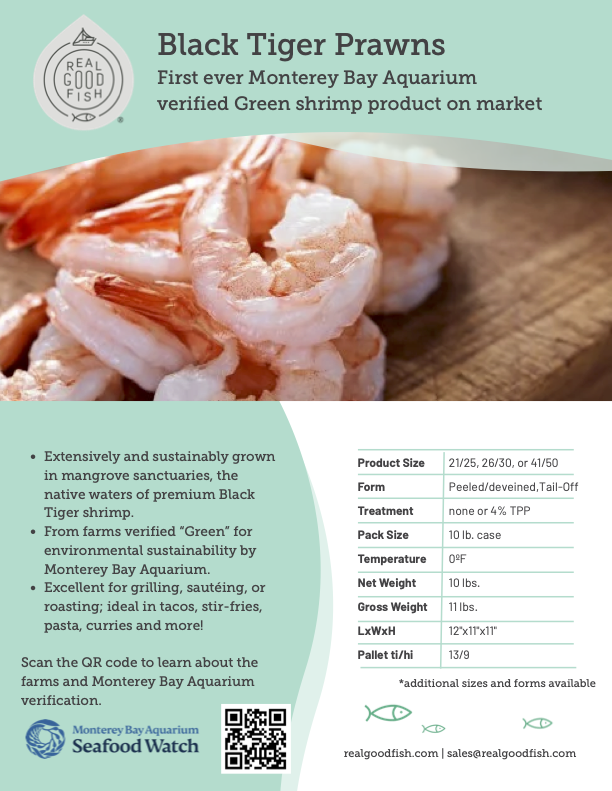
This matters because it directly challenges the long-standing narrative that Asian shrimp farming is inherently dirty, unregulated, or incompatible with sustainability. These shrimp are not produced through intensive monoculture. They are grown slowly in native mangrove waters, without reliance on antibiotics or industrial feed, in systems where forest preservation is mandatory—not optional. The Monterey Bay Aquarium verification does not invent these practices; it acknowledges what has already been happening on the ground for generations.
Equally important is what this represents for coastal communities. Market access—when done responsibly—creates economic incentive to preserve mangroves rather than clear them. It rewards farmers for restraint, not extraction. It demonstrates that sustainability does not require removing people from ecosystems, but rather supporting those who have long depended on them as stewards. When mangrove shrimp reaches the U.S. market through transparent, traceable supply chains, it creates a pathway for conservation that includes livelihoods instead of erasing them.
This moment should force a reckoning within U.S. environmentalism. If shrimp grown in Vietnamese mangrove sanctuaries can meet the highest sustainability standards of one of America’s most influential conservation institutions, then the problem was never the practice. It was the prejudice embedded in how we chose to see it.
Final Thought
It is time to challenge the deep-rooted environmental racism that has shaped our conservation practices. By embracing intersectional environmentalism, we can forge meaningful and inclusive change, ensuring that our approach to seafood conservation is sustainable, equitable, and respectful of the people and ecosystems it affects. Let us learn from the wisdom of indigenous communities, fostering a future where the preservation of nature goes hand in hand with the empowerment of those who call these ecosystems home. Together, we can pave the way towards a more just and sustainable future for all.
-
Reference List
1. Cornucopia Institute. (2015). “Asian Seafood Raised on Pig Feces Approved for U.S. Consumers.” Retrieved from [https://www.cornucopia.org/2015/03/asian-seafood-raised-on-pig-feces-approved-for-u-s-consumers/]
2. Bloomberg. (2012). “Asian Seafood Raised on Pig Feces Approved for U.S. Consumers.” Retrieved from [https://www.bloomberg.com/news/articles/2012-10-11/asian-seafood-raised-on-pig-feces-approved-for-u-s-consumers?leadSource=uverify%20wall]
3. Good Housekeeping. (n.d.). “They’re Filthy.” Retrieved from [https://www.goodhousekeeping.com/health/diet-nutrition/a20705777/disgusting-facts-about-farmed-shrimp/]
4. PBS. (2020). “Racism Targets Asian Food Business During COVID-19 Pandemic.” Retrieved from [https://www.pbs.org/newshour/nation/racism-targets-asian-food-business-during-covid-19-pandemic]
5. Wu, R. et al. (2016). "The Top 10% and Global GHG Emissions." National Science Review, 3(4), 470-474. Retrieved from [https://academic.oup.com/nsr/article/3/4/470/2669331?login=false]
6. Royal Society Publishing. (2021). "Reproducing Racism in Conservation." Proceedings of the Royal Society B. Retrieved from [https://royalsocietypublishing.org/doi/10.1098/rspb.2021.1871]
7. Eater. (2014). “Shrimp on Film: A Review of Two Documentaries.” Retrieved from [https://www.eater.com/2014/11/21/7258959/shrimp-on-film-a-review-of-two-documentaries]
Resources:
1. National Geographic. (n.d.). “How ‘Nature Deprived’ Neighborhoods Impact the Health of People of Color.” Retrieved from [https://www.nationalgeographic.com/science/article/how-nature-deprived-neighborhoods-impact-health-people-of-color]
2. The Conversation. (2020). “American Environmentalism’s Racist Roots Have Shaped Global Thinking About Conservation.” Retrieved from [https://theconversation.com/american-environmentalisms-racist-roots-have-shaped-global-thinking-about-conservation-143783]
3. New Yorker. (2019). “Environmentalism’s Racist History.” Retrieved from [https://www.newyorker.com/news/news-desk/environmentalisms-racist-history]
4. Harvard Gazette. (2020). “How Textbooks Taught White Supremacy.” Retrieved from [https://news.harvard.edu/gazette/story/2020/09/harvard-historian-examines-how-textbooks-taught-white-supremacy/]
5. National Geographic. (2021). “The Environmental Movement is Very White.” Retrieved from [https://www.nationalgeographic.com/history/article/environmental-movement-very-white-these-leaders-want-change-that]
6. University of Michigan. (n.d.). “Redlining and Environmental Racism.” Retrieved from [https://seas.umich.edu/news/redlining-and-environmental-racism]
7. PBS. (n.d.). “George Frederickson, Stanford Professor.” Retrieved from [https://www.pbs.org/race/000_About/002_04-background-02-01.htm]
8. University of New Mexico News. (n.d.). “The Complicated History of Environmental Racism.” Retrieved from [http://news.unm.edu/news/the-complicated-history-of-environmental-racism]
-
The content and information presented on Cheftu.com are solely for general informational purposes and are the opinions of the authors. We strive to provide accurate and up-to-date information, but we make no representations or warranties of any kind, express or implied, about the completeness, accuracy, reliability, suitability, or availability with respect to the website or the information, products, services, or related graphics contained on the website for any purpose.
The opinions expressed on Cheftu.com are not intended to serve as professional advice, including but not limited to culinary, nutritional, medical, or any other specialized advice. Always consult with a qualified professional or expert before making any decisions or taking any actions based on the information provided on this website.
Furthermore, the content on Cheftu.com may be subjective and reflect the personal experiences, beliefs, or opinions of the authors. Such opinions may change over time and are subject to change without notice.
Cheftu.com may contain links to other websites, which are provided for convenience and informational purposes. We have no control over the nature, content, and availability of those sites. The inclusion of any links does not necessarily imply a recommendation or endorsement of the views expressed within them.
We aim to provide a platform for diverse perspectives and discussions. Comments and user-generated content on Cheftu.com are the sole responsibility of their respective authors and do not necessarily represent the views of the website's owners or administrators.
By using Cheftu.com, you agree that the authors, contributors, and website administrators are not liable for any losses, damages, or injuries resulting from your reliance on the information provided. Your use of any information or materials on this website is entirely at your own risk.
We encourage our readers to exercise critical thinking, verify information independently, and seek professional advice when appropriate. Remember that opinions may differ, and what works for one person may not work for another.
We reserve the right to modify, update, or remove any content on Cheftu.com without notice.
By using this website, you acknowledge and accept this Opinion Disclaimer. If you disagree with any part of this disclaimer, please refrain from using Cheftu.com.
Last updated: August 2nd, 2023
Chef Tu David Phu
Hi!
Thanks for checking out
Cooking with Chef Tu.
I’m Tu David Phu, Top Chef Alumnus, Vietnamese-American, and SF Chronicle Rising Star Chef from Oakland. I’ve cut my culinary teeth in the kitchens of some of the nation’s top restaurants. But it was my “memory of taste” that pulled me back to my Vietnamese roots: the practices, ingredients, techniques, and flavors of Vietnamese cuisines. These recipes are my stories. And I hope it will inspire you (as much as it inspired me) to discover and eat thoughtfully.